The benefits of natural stone: marble, quartz and granite
Homeowners who value lasting design understand that beauty and performance shouldn’t be separate things. Natural stone brings both timeless aesthetics paired with the durability to withstand decades of daily use.
This guide explores the distinct benefits of marble, granite, and quartz worktops, comparing their longevity and character against common alternatives. Whether you’re renovating or building new, you’ll be able to easily decide if natural stone belongs in your kitchen.
Why choose natural stone for your kitchen?
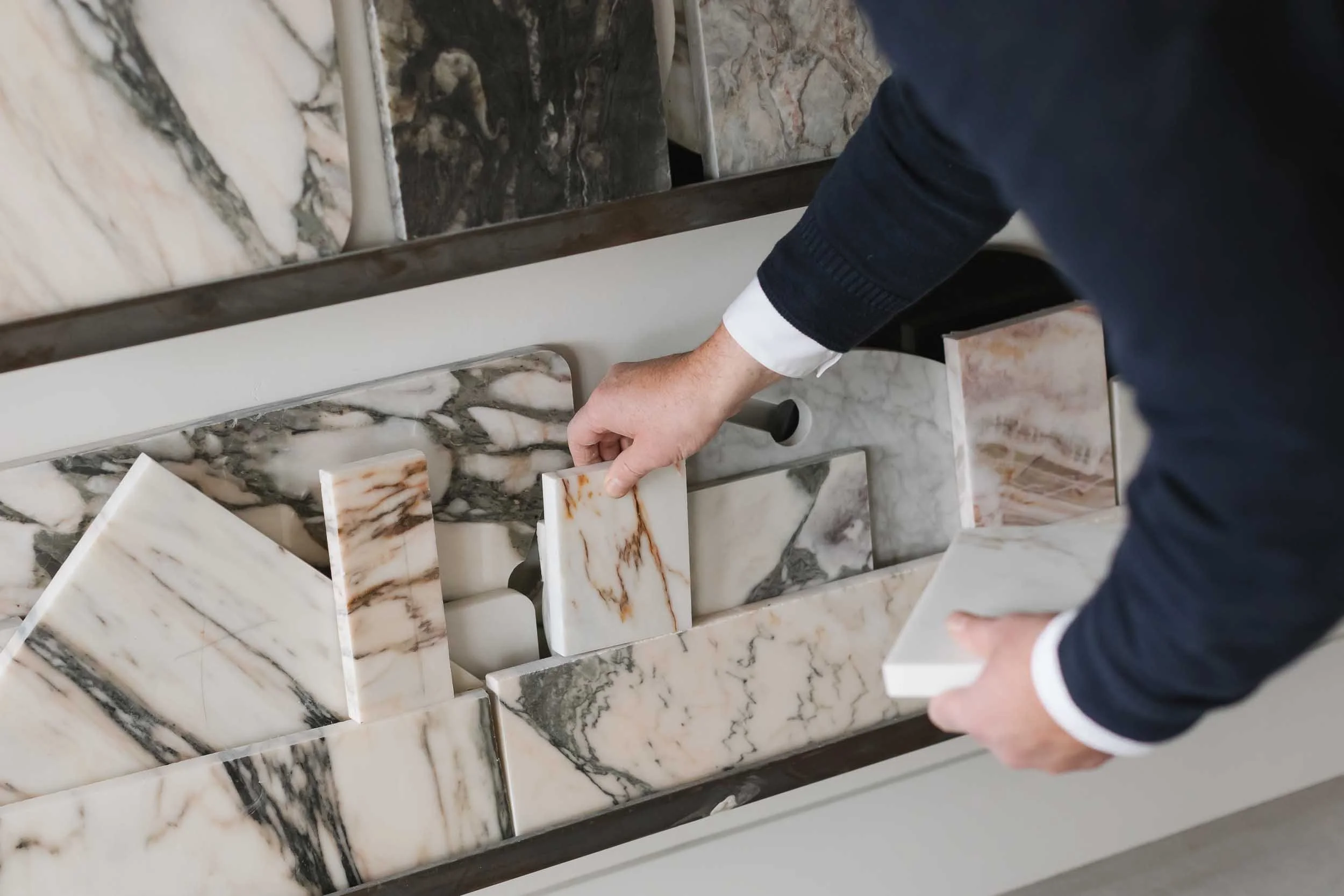
Every slab of natural stone holds its own DNA - mineral veining, textures formed over millennia, and tonal variations that are unique to each piece. This gives your kitchen worktop a truly exclusive character that doesn’t exist in anyone else’s home.
Where synthetic materials date quickly or are only used when they’re on-trend, natural stone maintains its relevance, beauty, and style across generations. Just like solid timber or hand-thrown ceramics that are still valued today, natural stone is appealing because of its authenticity, not fashion.
So, if you place deep importance on the design style and beauty of your home, then a benefit of natural stone worktops is that their beauty and style are timeless, with a level of versatility that extends across kitchen styles.
This is true whether you want a minimal contemporary space, classic detailing, or a family kitchen built for heavy use. Natural stone adapts and will last through each and every style change of your home.
The durability of natural stone worktops
Natural stone offers scratch and heat resistance that synthetics struggle to match. Stone kitchen surfaces can endure high temperatures like hot liquid spills, searing cookware, or slips of the knife far better than worktops made with resin, like laminate.
Stone worktops are inherently durable and last for decades, even generations, when properly cared for, unlike laminate which typically needs replacing every ten years. It’s easily scratched by sharp knives, burned and blistered from heat damage, and swells from water damage over time. It can’t be repaired like natural stone, which can be polished, resealed, and repaired to extend its lifespan.
By regularly sealing your quartz, granite, or marble kitchen surface with a sealant designed specifically for natural stones, you’ll be creating a sturdy protective barrier that prevents stains, liquids, and bacteria from seeping into the stone. You’ll be preserving a material investment designed to last the lifetime of your home.
Style and design benefits of marble, granite and quartz
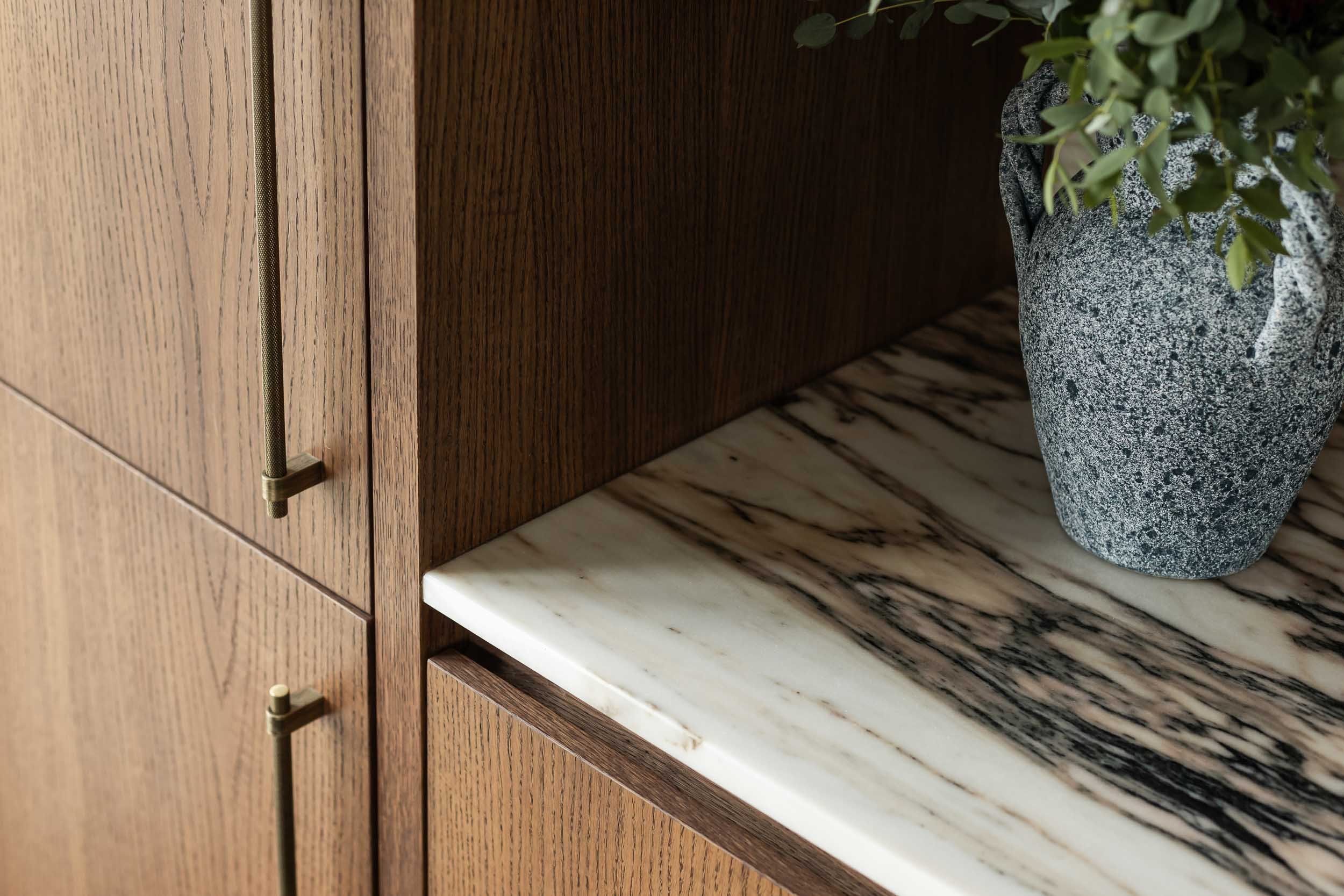
When you think of marble, you might think of bright white, granite may be deep black, and quartz something rosey like you’d find on a piece of jewellery. But you’re not limited to those. You can choose from almost any colour of the rainbow, even multicoloured quartz if that’s your style, with patterns that are entirely unique to the slab they’re on.
Depending on the style, design, and practical needs of your kitchen, you can choose between three finishes for your natural stone worktop.
Polished
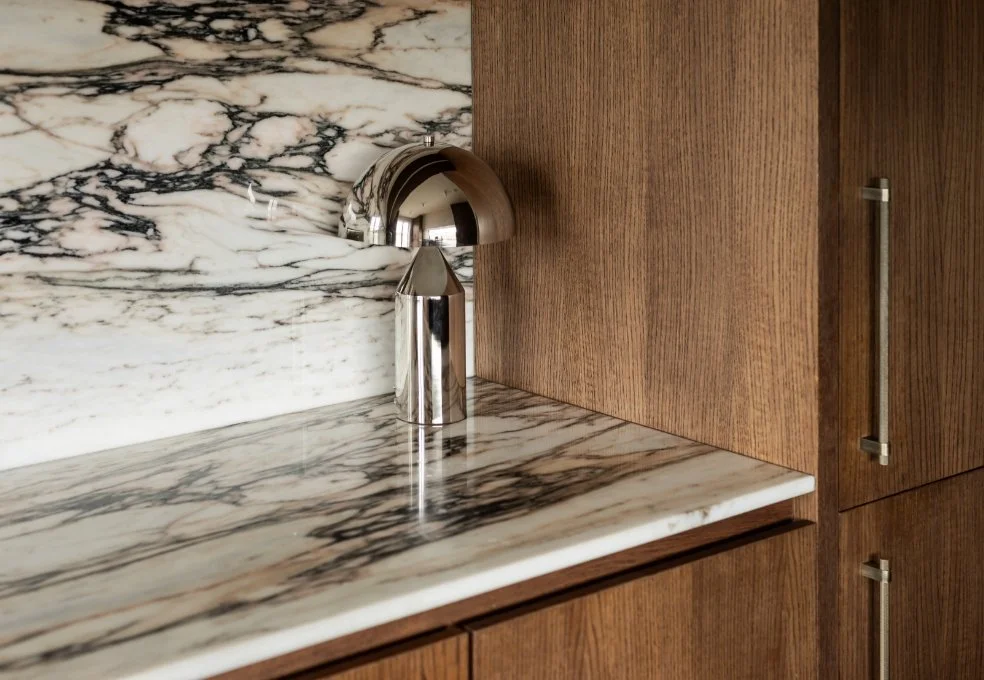
Character: High-gloss surface with pronounced reflectivity that gives a deep feel of luxury. Polished surfaces amplify rich colour and vein depth, creating visual drama and refinement.
Best suited to: modern contemporary designs that embrace contrast, kitchens with plenty of natural light, or spaces where the stone is the focal point.
Considerations: shows smudges, water splashes, fingerprints, and surface defects more readily than honed or leathered.
Honed
Character: smooth, soft, non-reflective appearance. More subtle and forgiving to scratches and fingerprints than polished surfaces.
Best suited to: Kitchens with classic or traditional aesthetics, and people who want a more understated level of elegance and luxury.
Considerations: May need more care to prevent dulling over time, slightly more vulnerable to staining because of the lack of sheen..
Leathered
Character: textured, subtle, low-sheen that hides small scratches, fingerprints, and water splashes well.
Best suited to: rustic, artisan, countryside-style kitchens with heavier use, and for people who want the stone to ‘mature’ with age.
Considerations: Textured means more opportunity for dirt to settle deeper, even if it does hide it well, and more careful cleaning.
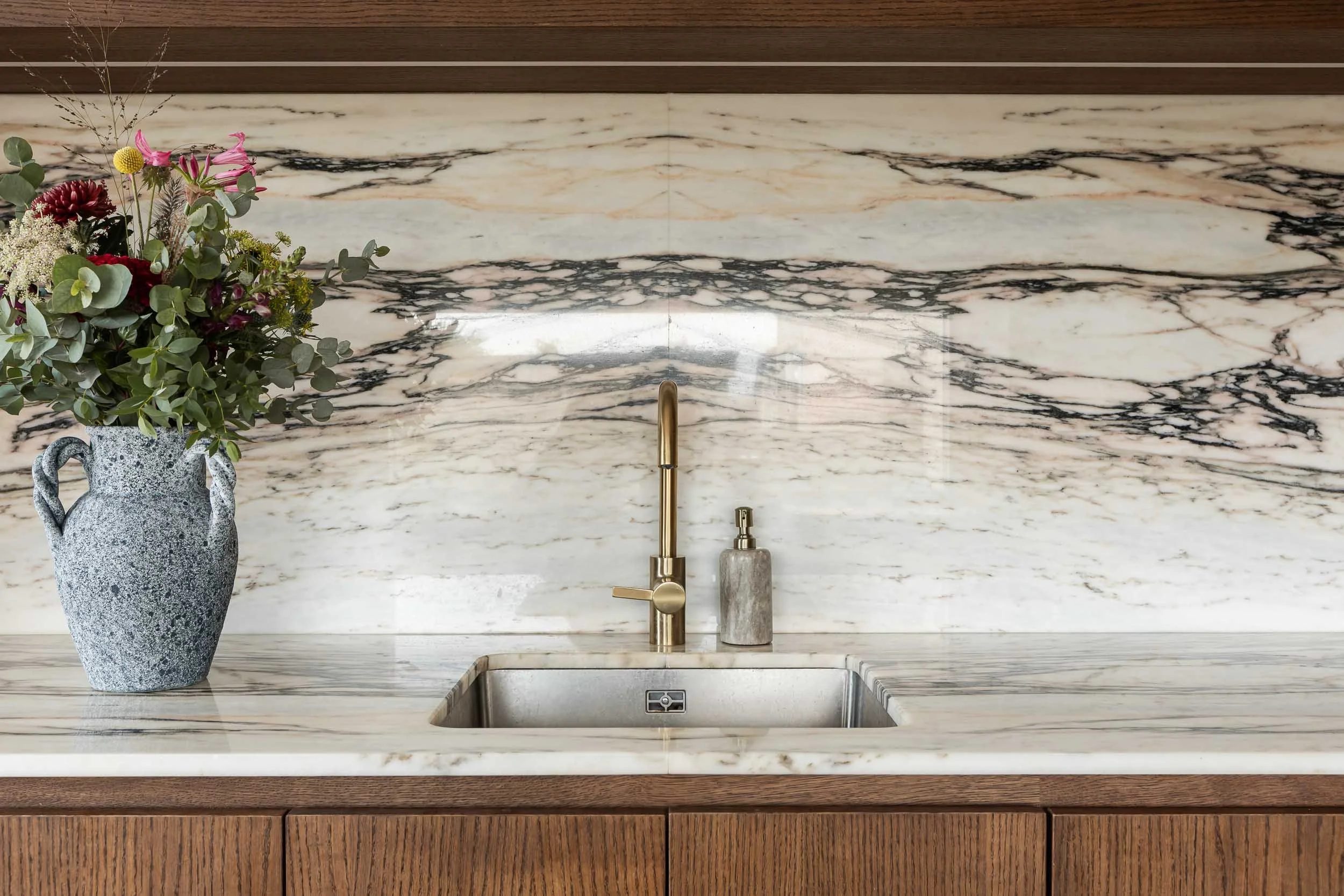
Beyond worktops, natural stone extends seamlessly into splashbacks, islands, and feature walls. This continuity eliminates the challenge of coordinating multiple materials because the same slab flows across all surfaces - perfect for open-plan kitchens where consistency matters.
Adding value to your home with natural stone surfaces
Whether you’re looking to redo your kitchen before selling, or you’re looking ahead to when you do sell up: buyers view stone kitchens as a premium feature. In fact, homes with stone finishes typically go for higher asking prices.
Why? Beyond its beauty, the uniqueness of stone gives it a level of exclusivity that synthetics cannot replicate. Stone’s high resistance to scratches and heat means it will continue to look new even after years of use, giving potential buyers a home with a desirable ‘move-in-ready’ kitchen.
Laminate and more upfront-budget-friendly surfaces offer far lower perceived value, leading to lower ROI or even price scrounging, as they may budget for redoing the kitchen worktops.
Stone, by contrast, pays for itself over time when you factor in the maintenance, repair, and replacement costs. That’s not even taking into consideration the potential higher resale value of your home.
Put simply, the durability, beauty, exclusivity, and versatility of stone signal ‘this home has been built to last.’
Caring for natural stone worktops
One of the benefits of natural stone worktops is that they don’t need a professional level of cleaning or specialised products - just simple daily care that’s no more than you’d expect to do with any other surface.
Because natural stone is porous, an intact sealant prevents liquids and staining agents from penetrating its surface, making it genuinely low-maintenance.
A simple ‘water droplet test’ confirms whether resealing is needed: drop water on the surface; if it beads up, the seal is working; if it absorbs, it’s time to reseal.
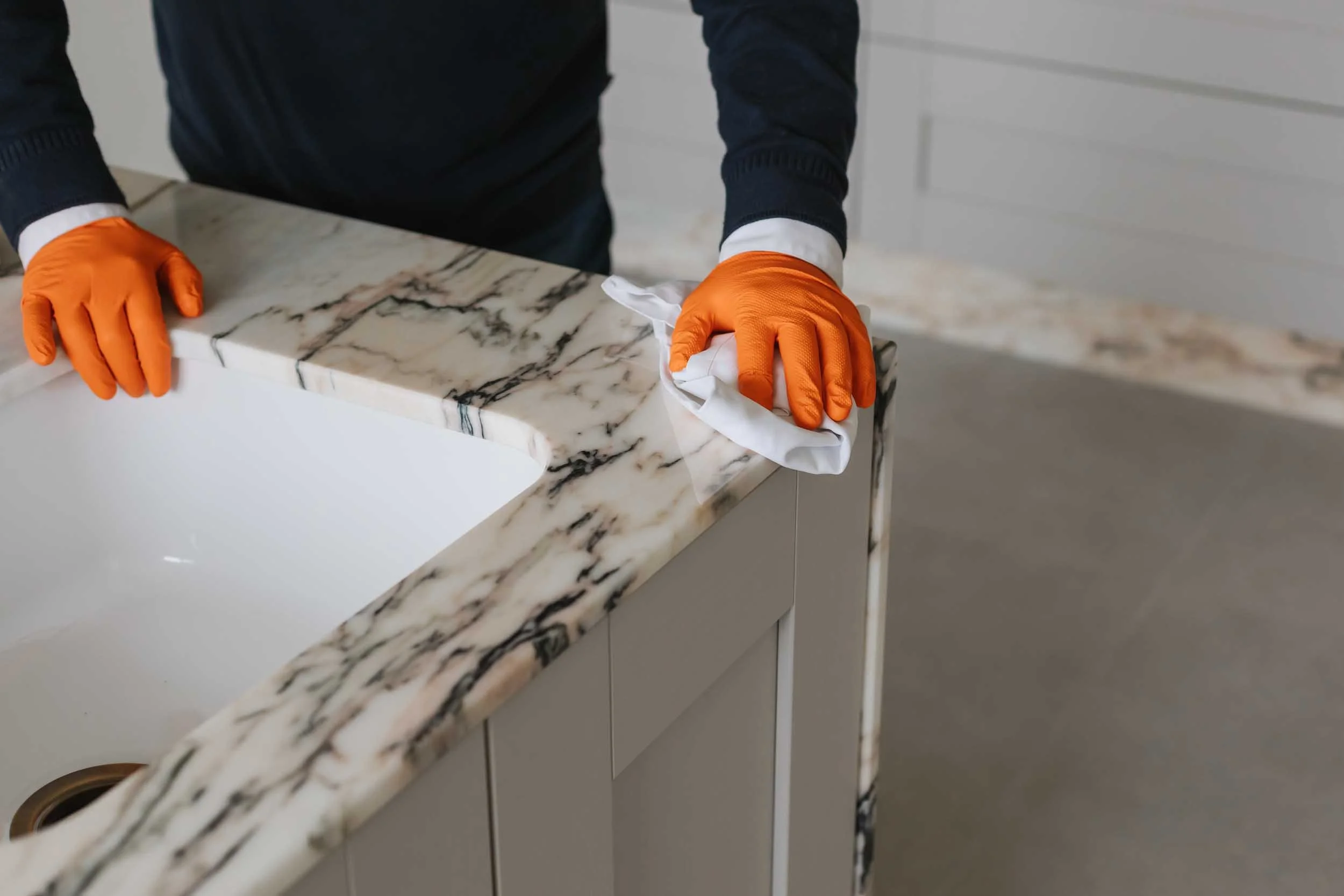
For spills, put a tiny drop of unscented, pH-neutral dish soap in a bowl of warm water and soak a soft cloth with it to wipe the spills away.
Avoid acids or harsh cleaners as they’ll damage the seal.
Just this simple measured maintenance will pay itself back in longevity alone, preserving the stone’s appearance for decades.
How natural stone compares with other kitchen worktops
Natural stone vs quartz (engineered).
Natural stone is, as the name says: 100% natural. It’s mined and sent straight to us, no chemicals added.
Engineered quartz, unlike natural quartzite, is quartz mixed with resin for consistency for those who want a uniform, predictable look. Because of the resin, sustained high heat or sudden temperature changes can cause cracking or discolouration, making it have lower levels of heat resistance than natural stone. It may also lose its colour when exposed to sunlight, which many kitchen worktops are.
Natural stone vs wood
Wood is, of course, natural and timeless. Wooden worktops can give a kitchen a rustic, earthy feel, and with regular oiling and sanding, they can look good for years. But, even premium wood remains fundamentally vulnerable and highly sensitive to scratches, heat, dents, and water damage that can make it mouldy and discoloured.
If you prioritise durability, style versatility, materials built to last, and beauty within your home, natural stone is the best choice. You don’t need to choose between practicality and elegant beauty - natural stone gives you both.
The benefits of natural stone worktops for your kitchen aren’t simply to get a beautiful, thoughtfully designed countertop. They’re also highly durable, versatile, offer a guaranteed return on investment with proper care that pays for itself, and with lower replacement costs than the alternatives.
So, whether you’re looking for the perfect statement for your luxury kitchen, a practical worktop that looks as beautiful as it is durable, or preparing your home for sale, explore our approach to natural stone kitchen design.
Contents
Why choose natural stone for your kitchen?
The durability of natural stone worktops
Style and design benefits of marble, granite and quartz
Adding value to your home with natural stone surfaces
Caring for natural stone worktops
How natural stone compares with other kitchen worktops
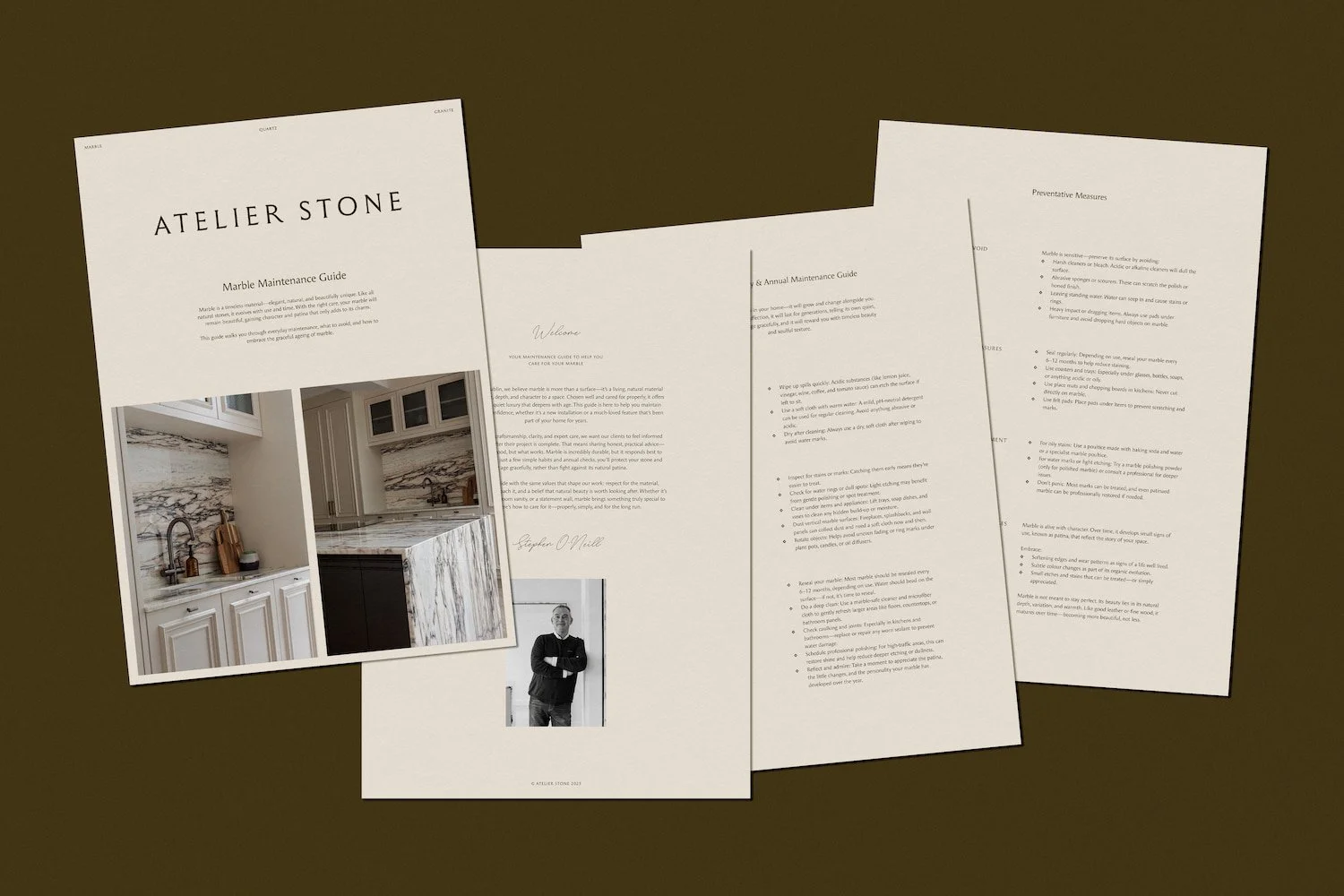
Get the marble maintenance guide